The short answer
Modular court tiles sit on top of a concrete or asphalt pad, so the choice is really about the playing surface. Tiles drain through, have some give underfoot and can be repaired one piece at a time. Painted or coated concrete gives the liveliest bounce but shows cracks. Bare asphalt is simplest but runs hot and rough.
Three surfaces, one base
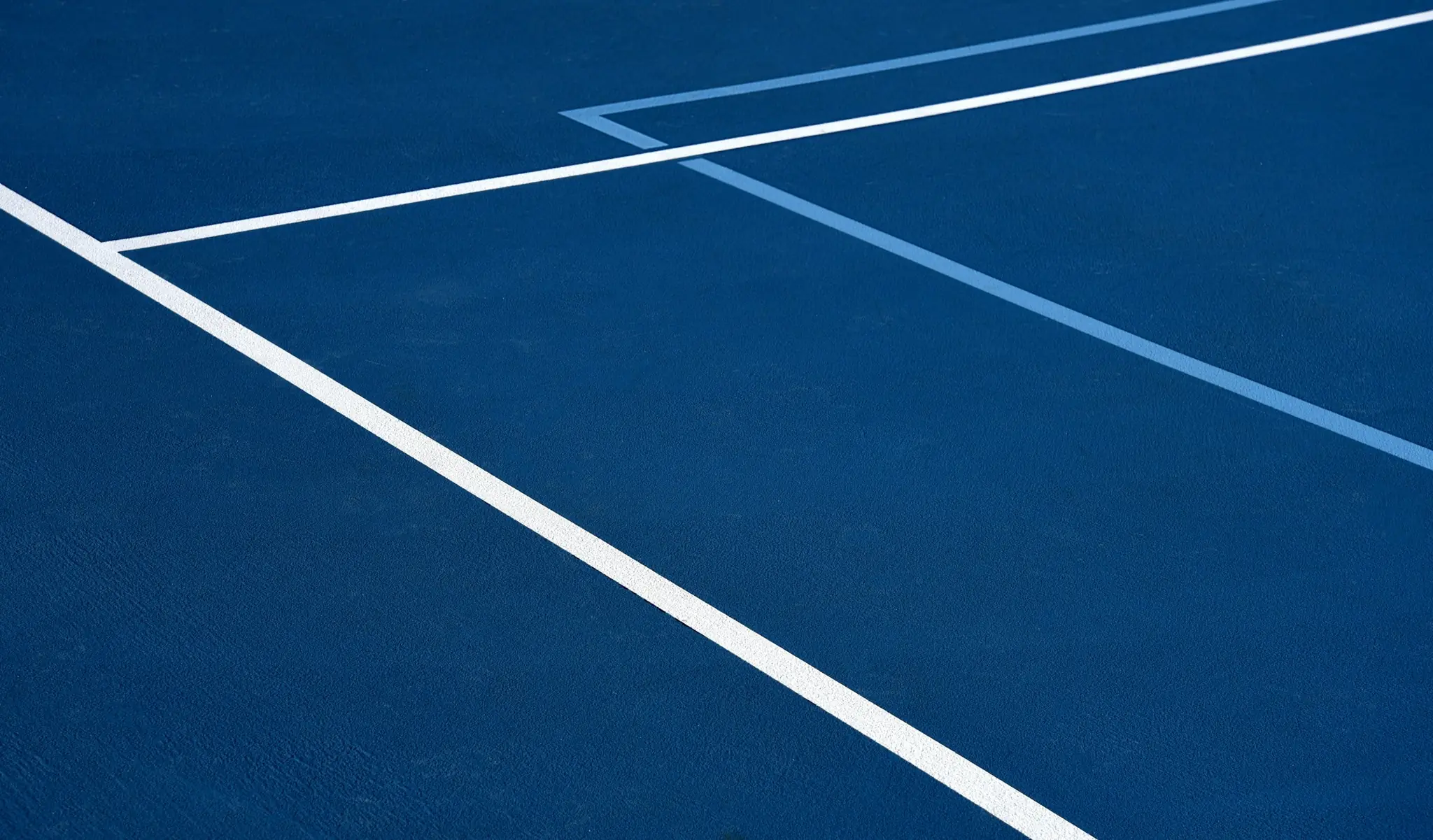
Every home court starts with a hard base. Bare asphalt is that base left as it is. Painted or acrylic-coated concrete is a slab with a colour coating and lines applied on top. A tile court is the same slab or asphalt with an interlocking tile surface laid over it.
So tiles do not replace the pad. They change what you play on, and they can go over a pad you already own.
Side by side
The comparison below is general. Any surface is only as good as the base under it.
| Factor | Modular tile | Coated concrete | Bare asphalt |
|---|---|---|---|
| Drainage | Open grid lets water through to the pad | Water sits until it runs off or dries | Water sits in low spots |
| Surface heat | Stays cooler than bare asphalt | Depends on the coating colour | Dark surface runs hot in full sun |
| Underfoot | Some give | Hard | Hard and rough |
| Ball bounce | Consistent, slightly lower | Liveliest | Good when new, less even as it wears |
| Upkeep | Sweep, blow or rinse | Recoat and repaint lines over time | Fill cracks and reseal |
| Repair | Swap individual tiles | Patch and recoat | Patch or resurface |
Drainage and playing after rain
An open-grid tile lets rain and meltwater pass through to the pad below, where it runs off along the slope of the base. The playing surface sits above the water, so the court is usable sooner after a shower.
On coated concrete and asphalt, water stays on the surface until it drains or evaporates, and low spots hold puddles.
Heat and impact on joints
Dark asphalt absorbs sun and can be uncomfortable on a hot afternoon. Tiles stay cooler than bare asphalt, and lighter colours help further.
Tiles also have a little give, so the surface is slightly softer than bare concrete under running and jumping feet. Concrete and asphalt have none. Bare asphalt is also the roughest of the three on knees and elbows.
Bounce and feel
Coated concrete gives the liveliest bounce. Sport tiles give a consistent bounce on a flat base. It is slightly lower than on painted concrete, and recreational players adjust to it quickly. Asphalt bounces well when new and less evenly as it weathers.
Maintenance and repair through Canadian winters
Freeze-thaw cycles open hairline cracks in most slabs over time. On a coated court those cracks come through the coating and the lines, and the fix is patching and recoating. Tiles float on top of the pad, so small cracks underneath do not show on the playing surface. If a tile is damaged, it can be unsnapped and replaced.
Tiles do need a small expansion gap at the perimeter and a base that is flat. Heaves and low spots in the pad should be fixed before any surface goes down.
The trade-off is cost. A tile surface is an extra purchase on top of the pad, while bare concrete or asphalt needs nothing more to start playing.
Reviewed November 2026. Kit prices are in Canadian dollars before freight and tax and are confirmed on your quote.